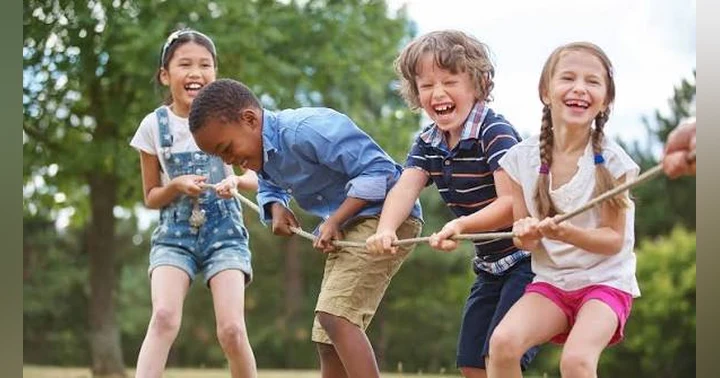
All Is Not Lost When There is Play

Play is self-determined learning at its best, Peter Gray author of Free to Learn states, nature does not turn off our desire and capacity to learn when children turn five or six, we turn it off with our coercive system of schooling. In this episode, Terri speaks with Dr. Gray on the history and value of play, parenting styles, his definition of play, and the concept of learning loss.

 Apple Podcasts
 Spotify
 Overcast
 RSS Feed
 Resources:
Free to Learn
Social Media
Peter Gray Facebook
Blog:
Psychology Today Blog
Four new collections of essays:
Tipping Points Press
If humans are naturally drawn to learning, why doesn't everyone enjoy school? If everyone has unique gifts and talents, why do some people feel dumb, depressed, and insignificant? If you want something different, you need to do something different. Welcome to the Element is Everything podcast, where we discuss real-world experiences, research, and strategies around finding your element, what it is, how to do it, and how to support others in developing it. Please welcome your host with over 30 years' experience in public education and independent learning, Terry Novichek.
SPEAKER_02Imagine a safe environment in which to play and explore access to tools, ideas, and people. The freedom to bend rules, make new rules, challenge the status quo, and just see what happens. Just having fun for fun's sake. Play is self-determined learning at its best. Peter Gray, author of Free to Learn, states Nature does not turn off our desire and capacity to learn when children turn five or six. We turn it off with our coercive system of schooling. We hear from Dr. Gray today on the history and value of play, parenting styles, his definition of play, and the concept of learning loss.
SPEAKER_00Hello, Terry.
SPEAKER_02Good morning. And it's nice to have the opportunity to get your thoughts on where we are today. Can you fill me in a little bit on your background as a psychologist?
SPEAKER_00Yeah, so I'm uh my official title now is research professor of psychology and neuroscience at Boston College. I retired quite some years ago from teaching, uh, but continue to conduct research. And my background is more in biology than psychology. My uh PhD degree was uh in biological sciences. For many, many years I was doing brain research on rats and mice, but then quite some time ago, I changed my career um towards uh looking at children's play and how children educate themselves when they have the opportunity to do so. And if you if you read my book, you know the story about what led me to change that my career. My son um had been rebelling in school, and so he ended up being enrolled in this radically alternative school, the Sudbury Valley School. And um, my own concern as a father, plus my scientific curiosity, led me to uh do a study of the graduates of that school to see how they do, given that they're not doing anything that looks like traditional education. How are they how are they doing as as adults uh when they leave? Partly motivated by my concern about my son, should I allow him to stay there all the way through high school? Or, you know, and partly partly out of my own curiosity from what I had learned about the school, my own thinking about the school. And that turned out to be so interesting that ultimately I uh over a few years I I gradually dropped the laboratory research I was doing uh uh with rats and mice and um began devoting my research efforts to the study of um self-directed education. And I retired early from teaching, and partly because I could. I'm also uh the author of uh introductory psychology textbook that has sold well over its editions, and so I didn't really need the salary from teaching. So I'm no uh my title is kind of an honorary title that I'm not being paid by Boston College, and but I also have no responsibilities towards them. But it frees me up for my own research and writing, and uh I have the opportunity, which I would have anyway, without the title of using the facilities at Boston College to the degree that they're available. So that's kind of where I am, a little bit about my background.
SPEAKER_02All right. Well, so you mentioned your son, and I wanted to ask about that. As parents, we do become natural observers and scientists, whether we want to or not. I had a similar experience with my own children. That's what our organization is all about is self-determined learning and empowering learners to take ownership, take initiative, uh adults as well. And some would argue that it's not for everyone. I know, I mean, you wrote a whole book around free to learn, you know, let nature take its course. Do you believe that there are some people who need more structure?
SPEAKER_00And well, that's a that's a very good question. And it's a question that I had in mind initially, and uh it's a question I'm often asked. I think it is for everyone, with the exception maybe of some people who have um very severe um disorder, if I may use that word, uh, that really uh who really, really need the um the uh kind of training and facilitation and help of somebody who's an expert concerning that kind of a problem. So for example, somebody who's far enough out on the autism spectrum, I would uh that person needs help from people who know how to help that person. Somebody who has Down syndrome probably needs extra help. But when people ask that question, they often what they have in the back of their mind, or maybe even the front of their mind, is well, aren't some kids just naturally self-motivated and this is great for them? And other kids are not so self-motivated, you know, and oftentimes people have their own child in mind, is just not a self-motivated kind of person. I don't think it would work for my child. And my response to that when people raise it, have you ever seen a three-year-old who's not self-motivated? We are all by nature self-motivated. We are all self-motivated, and some of us get that drilled out of us uh as we go along. And then it looks like we're not self-motivated. So I've seen that. I've seen, you know, kids who said who say, you know, uh who are in typical school and don't particularly like typical school, and somebody will suggest, well, why don't you do unschooling or or go to a Sudbury school or something? And they'll say something like, No, I'm the kind of person who needs a kick in the pants to do anything, you know, and so I I um I recognize that people believe that, uh, but I also think that to the degree that's true, those people need self-directed education more than anybody else. Because you can't go through life always needing a kick in the pants to do anything. You're gonna have to learn how to take initiative. And so, in your in if you are in a situation where nobody's giving you that kick in the pants, you maybe go through a period of not doing anything. Maybe you go through a period of just saying I'm bored, but ultimately you come out of it. And that period of being bored, that period of there's nothing here to do, nobody, you know, because nobody's making me do anything, that dissipates over time. And um, I think in this case, it's especially helpful probably to be in a setting where there are other kids involved in self-directed education. So you're in a Sudbury school or an agile learning center or some kind of setting where there are other kids your age and older and younger, and you see they're doing all these interesting things, and you can't help but get involved in some of them.
SPEAKER_02What would you say are the behaviors or parenting techniques that you've seen that tend to inhibit self-directed learning?
SPEAKER_00Well, so uh so I've I've written a number of articles and chapters about parenting styles. And I find it useful to distinguish um between three general parenting styles, recognizing that nobody is all one of these. We're all kind of some combination of the three. But one parenting style is the parenting style that I um that I promote and favor and argue for is what I call a trustful parenting style, which is basically I trust my child to grow up. I'm providing the conditions, I'm trying to provide a healthy environment, I'm trying to provide good food, I'm trying to provide safety and comfort for my child. But it's not my job to direct my child's development. My child is going to develop, that's my child's job. My child is going to develop the way they're going to develop. I need to provide the conditions that allow my child to develop in the way that he or she wants to develop. That's the job as a parent. It's not my job to decide what my child is going to do one minute to the next, and certainly not my job to decide what my child's career is or whether they should go to college or not go to college. This is all up to the child. That's trustful parenting. They're going to be all right. You know, the development psychologist, uh Alison Gopnick, um, who's written a number of books about children's abilities, has written a book for parents called The Gardener and the Carpenter. And uh I like that kind of an analogy. And she says, too many parents try to be the carpenter kind of parent. They believe that they can create, that they can shape their child in accordance with some idea that they have in their head of what that child should be and what the child is going to be like. Well, you can do that if you're a carpenter. You can make chairs that way, you can make cabinets that way. But she says a better analogy is being a gardener. So you plant the seed, you know, this thing grows. You can't control how it grows. You can provide the fertilizer, you can make sure it's getting sunshine, you can provide the environment, but it knows how to grow. You're you are not growing it. You are simply planting the seed, providing the conditions. Well, that's kind of trustful parenting, as I as I mean it. So the the alternatives to trustful parenting, the things that break are uh are are directive parenting. Now, years ago, not so much today, but years ago and in the past, throughout most of recorded human history, not throughout most of biological human history, but throughout most of recorded human history, most people were in the mode of uh what I call domineering, directive domineering parenting. That the goal of the parent is to uh train the child to be obedient. The schools that were predecessors for the schools we have today, if you read the writings of the people who founded those schools, the purpose of the school was to drive the free will out of children and make them obedient. That was the primary purpose. In addition to that, they wanted to teach children to read so that they could read the Bible, and they wanted to teach them biblical doctrine so they their souls would be saved. Those were the three purposes. But you read the writings of these people, and the primary purpose was obedience training. And so that was the dominant mode. And even into the 20th century, there were still many parents who would beat their children if the children didn't obey. Many parents had the idea if you talk back to me, that deserves discipline, right? Child didn't have the right to talk back, the child had to be obedient to the parents, no questions asked. The phrase, because I said so. That's the that's the phrase of the of the dominant, you know, I am teaching you that you are a lower member of the hierarchy here. And throughout, throughout so much of human recorded history, that was actually an important lesson because in fact we were living in a very hierarchical society. To some degree, we still are, but it is modified in its form, such that it, you know, through in feudal times when all this developed, most people were growing up to be servants of one sort or another. Very few people that were there were in feudal times the the all the land was owned by relatively few nobles, and the great majority of people were going to be servants, serfs of one sort, slaves, even. And if you're in that category, if you talk back to your master, you could get killed. So no surprise that the goal of parenting, the goal of the early schools, was to teach children to be subservient. So there's still a little bit of trace of that in some parts of modern-day America, more so than in Europe. Uh, there's still some traces of that. There are still families who beat their child. There are still families who say because I said so. Um, but so that's the so but more common than that is a different kind of directive parenting today, which is what I call directive protective parenting. So these are parents who don't, they they don't have the goal of of uh of their child being a submissive creature. They have the goal that their child will, they want their child to flourish, they want their child to have free will and so on and so forth, but they defeat their own desire because they are so motivated about protecting their child. So this is quite a different sort of dominance from the from the uh direction from the dominating form. The dominating parent doesn't think the child is fragile, they wouldn't be beating the child if they did, right? So they think the child is tough, but they think that the toughness is a problem and they need to beat it out of the child, so the child is more subservient. Today, parents are more likely to think their children are these fragile creatures who are going to break if uh if God forbid they fell from a tree or from a slide, or they, or even they're going to break psychologically if people call them bad names, or if they don't win the trophy, or if they don't get invited to a birthday party, and all of this kind of thing. So, what we keep hearing today from places like Parenting Magazine is you have to protect your child even from these kinds of psychological uh damn, potential psychological damage. We're all oriented towards the idea that children can be damaged forever if something, if they and if if they have some kind of an emotional problem as a result of whether it's other people teasing them, whatever it is. So we are constantly protecting our children. And to protect our children means that we are really not allowing them to be themselves. We're not allowing them to go out and play uh by themselves, which is what children have always done in the past, even during times of directive domineering parent, their children still could get away from their parents, they could be out with other kids. Now they can't. So, in some ways, today is worse than then, because parents are in children's faces all the time, always wanting to know what the child is doing, what the child did today, what did you do today, who did you play with, and all and mostly not even allowing the children to play with other children without them being there. The other part of this protection is the fear that parents have that the child is ultimately not going to make it as an adult. If the child doesn't do well in school, parents have been more or less brainwashed by society to believe that performance in the school is the be-all and end-all of childhood, so that they can get into an elite college, you know, and so that then they can get a high-paying, high-status job. So the concern about education and education has become more and more narrowly defined. Schools are more and more narrow in what their curriculum is. And education, schooling, I should say, rather than education, is taking more and more of children's time all the time. It's more and more competitive, it's more and more stressful. And as a consequence of all these fears we have about children's development, we are creating very fearful and depressed generation of children. The children themselves come to believe that they've got to do really well in school or they're going to be failures in life. Or they even if they don't, even if they don't do that, they feel depressed or anxious because they're not performing as well as they should. But even those kids who are performing well, they feel like I'm a failure because I got a B in the course, right? Instead of an A. So this is the this is what's happening now. The rates of anxiety, the rates of depression, and I hate to even say the word, the rates of childhood suicide are at record levels. They've never been this high before in the history of America. They've been this high in China, which is ahead of us in this kind of over control of children's lives. So it's really right now the biggest problem is that we are a society that feels like children are fragile and need to, number one, be protected from possible injury from possible psychological, and number two, that the employment situation is such that if they don't do very well in school, their adult lives are going to be failures. And so um, so we put all that pressure on kids.
SPEAKER_02Yeah, you end up with kids that become either too timid or others that become rebellious, and they end up on the different ends of the spectrum. So you're mentioning school and the the time to play. Nice segue into uh what is play. Something that stood out for me was playing a pickup game of baseball is play, playing little league is not. And then when I read what you described as the five key factors of play, I read that to understand little league could be considered play, depending on why you're doing it. Is that accurate?
SPEAKER_00Well, that's a that's an interesting point. It could be more playful, I would say. Play is not necessarily all or none, but I would never call little league play. Uh, and I'll tell you why. So, my definition of play is the is that play is an activity that has um five characteristics. The first characteristic, and this is why little league is not play, is that it is self-chosen and self-directed. So you the the child might choose to play little league, but once you're playing little league, it's not self-directed. You are being told by a coach what your position is, whether you're playing or not, when you're playing. Everything is being run by a coach and by the umpires. The adults are running the show once you enter. You could say the same thing about school. If I choose to go to school, but then the adults are running the show. I've chosen to go to school, but that's not play because the adults are running it. They're telling me what to do. So one of the great things that children learn in play, so they learn it in the pickup game of baseball, but not in the little league game, is how to govern their own activities. So you watch kids playing a pickup game of baseball, and they are constantly negotiating what they're doing. You know, who's how they have to choose up the sides, they're not playing in a manured field, they have to make, they have to make ground rules. Anything towards that busy street is an automatic out. The big kids have to bat with their non-dominant hand, you have to pitch soft to the little kids, and so on and so forth. In order to make the game fun, you are doing a lot of negotiation, you're taking into account the needs and desires of everybody because if the other kids aren't happy, they'll leave and go home, which is not going to happen in Little League, right? So you have to keep everybody happy. And the goal of this game is not to win a trophy. Nobody cares in the end who wins. You might cheer wildly whenever your team scores because that's part of the whole fun of the thing is to score, right? But in the end, you've usually even forgotten. Certainly by the next day, nobody knows who what the score was, and nobody cares. Parents are not watching this. Game, and so you're not trying to impress your parents, it's not going to go on anybody's resume. You know, that's the difference between play and non-play. So when you're doing something, it's I can very well understand. I myself was in the situation. I played mostly pickup games, pickup baseball, but we had something a little bit like little league, and I I joined it and it was fun and it was a different kind of experience. But what I learned in Little League, and then subsequently when I played varsity high school baseball, what I learned was about baseball, right? It wasn't about the rest of life. What I learned in pickup baseball was about the rest of life, how to keep my playmates happy, how to negotiate, how to be sure we're all having fun, how to solve our own problems rather than have somebody who's up higher in the hierarchy solve our problems for us. So when we when we think that playing adult-directed sports is a replacement for children's play, we're making a huge mistake. We're depriving children of the opportunity to learn how to take control of their own lives. And we are presenting them yet one more lesson that you don't control your own life. It's these higher up people who are controlling what you are doing. So that's the first definition of play. I'll give one other one one other characteristic of play. I won't go through the whole thing. It's all in my book and another writing. But the uh second characteristic of play, which is also shows why Little League is not play and um pickup game is, uh, or at least at least it tends to show that, uh, is that play is something you're doing just because you want to do it. You're not doing it for some extrinsic reward. So play is how you really discover what you like to do. Now you might be playing little league ball just because you want to do it. Once you're doing it, it's hard for that reward to not begin to dominate your motivation because now suddenly you're on a team that cares about winning. The coach cares about winning, the the uh your parents may care about winning, there's a trophy at the end, there's the possibility that if you perform really well, people are watching this and you'll make it into the high school team, and maybe ultimately you'll even get a scholarship, baseball scholarship to college. So suddenly now there are all these extrinsic motives for doing it that can overwhelm the intrinsic motive to doing it, which is that I'm just doing this to have fun. In the pickup game, you're playing to have fun. And if it's more fun for you to uh to bat with your non-dominant hand because it's more challenging and you're training that hand, then you do that. In the in the Little League game, your coach would take you out of the game if you did that because you're not you're not doing something that's gonna help the team win.
SPEAKER_02Yeah. Well, another thing I comes to mind as you're saying all this is just that conflict resolution that goes on, say for out. Um who's you know, who's going to play what position, um, you know, foul ball fall or not, you know. I mean, obviously the ideal is not that the kids literally do get out, but there is a lot more value in the kids working it out themselves than an adult jumping in right away and just saying stop it and everything is because they haven't learned how to resolve it on their own, they've just learned to obey.
SPEAKER_00Exactly. And and this is one of the most important skills that human beings have to develop if you want to live a happy life. You have to know how to get along with other people, even when you and that other person have different uh interests, different ideas, different drives. How do you how do you compromise? How do you how do you uh share your differences? How do you resolve conflicts? And how, and the other thing in the little league game is you have to pay attention to whether your playmates are happy or not, including the playmates on the other team, because if they're not happy, they'll quit. The fundamental freedom in play is the freedom to quit. And so if you fail to keep your playmates happy, you won't have a game after a while because people will go home. They'll say, you know, I'm not having fun, I'm leaving. That I've I've uh written an uh an essay on the theme that the most fundamental freedom is freedom to quit. And that's certainly true in play. It's that freedom to quit that makes play the most democratic of all activities. Because when kids are playing together with no adult authority, they have to decide by consensus. They have to decide, they have to agree among themselves on what they're doing. Because if they don't agree, those who don't agree will say, okay, well, you go ahead and play, but I'm I'm going home. And if enough go home, you don't have your game. If it's just two people playing together, it's all over if my playmate leaves. If if it takes it, you're never gonna have 18 people for a pickup game, or rarely, so you're not gonna have full teams, but you probably need at least nine or 10, you know, to have to field two teams. Well, if if you've got 10 and three of them leave, it's all over. So you've got to make sure that you're keeping everybody happy, including the little kids, including the the kid who wants to pitch all the time, even though he's not a great pitcher, you're gonna have to let him pitch some, you know, otherwise he'll go home.
SPEAKER_02Right. So there's a lot of talk around learning loss because of you know, our schools being closed, you know, on again, off again, uh, different levels of support for students during the pandemic. So, what I'm seeing is a little bit of a knee-jerk reaction of, oh goodness, our kids haven't had a good education in the last year and a half. So now we're gonna really push it into them. And what are the words that will help people calm down about that? And right and just relax and and know that these children have not been damaged for life, and that this is the way we need to bring them back out into society.
SPEAKER_00Right. Well, first of all, we way overvalue uh what children supposedly learn during the year. Think about your own education, think about, you know, we forget 99% of what we learned in school. And and what and that part that we remembered, we would have learned out of school anyway. So we're not or most of that. I know that's a slight exaggeration. I'm sure that everybody has some things that they learned in school that they haven't forgotten that made, but it's a tiny bit of what of all that you went through. So here's a couple of uh observations that come from research. One is, you know, even before COVID, you would read typically at the big during the summer or the beginning of the next school year about the so-called summer slide that academic learning is lost over the course of the summer. And there have from time to time been movements in various cities to make school go through all through the summer so kids wouldn't lose in the summer what they gained the previous year. Uh, that's what's that's so the so-called summer slide. Well, um the first thing that came to my mind when I began hearing about the summer slide, and there were people saying that in Boston um a few years ago that uh, well, we need to keep some school all the way through the summer, there were people seriously pushing for that. Well, one of the things that came to my mind, well, what if if kids are going to forget in the summer what they learned the previous year, aren't we all going to forget it when we're done with school anyway? You know, so if uh if if we need this, if we need school through the summer so people don't forget it, maybe we need school for the rest of our lives so we don't forget it. Uh, not very many people are in favor of that. So that's um that's one way. But then then I asked the question well, people talk about the summer slide. Is there actually any any evidence for it? And um the primary thing that people are concerned about, people are not so much concerned about whether children remember the history facts that they learned the previous year, uh, because they know that those things are lost. They know that kids only remember those for the sake of the test. What they are concerned about, what the summer slide is concerned about, where there has been some research related to it, is do they they lose basic academic skills? In other words, do they lose in their reading ability for young kids? Do they become worse readers and they have to start over again in some sense of learning to read? And do they lose mathematical ability? Somehow we've decided mathematics, in addition to reading, is an essential part of academic learning, and we get concerned if they lose those skills. So it turns out that there have been some systematic studies testing children at the at the end of one academic year and then at the beginning of the next academic year on their reading ability and on their mathematical ability. Uh, none of these have been really recent. This was quite some years ago that I found studies that were done quite some years ago. The finding regarding reading was no evidence of the summer slide. Reading skill tends to increase over the summer, if anything, at a faster rate than it did during the school year, but at least as fast a rate. No slide in reading. Uh, to me, not surprising because the summer is a time when kids have time to read what they want to read, and your reading skill is going to improve when you're reading what you want to read more so than when you're reading what somebody's making you read. So, where they have documented a summer slide is in arithmetic or mathematics, if you want to call it that. And so, but then I looked at um at more carefully at those studies. And in every case where they've documented a summer slide, what they tested regarding arithmetic and mathematics was simply the ability to do the calculations as they are taught in school, which really means do you remember the algorithm for long division or for adding a column of numbers or for multiplying one fraction by another, uh, and so on and so forth? Do you remember how to do that? People tend to lose that, although they gain it within a week or two of school again. So it's no big deal again once they're reminded of it. Now it's not surprising to me that people lose that, because that's not something that you do a lot of, and it's not something, and it also is something that people have learned simply by memorizing it. They don't really understand it. There's even evidence that the teachers who teach it don't understand it. There's really actually studies showing that the teachers who know how to multiply one number, but two-digit number by another two-digit number, and they can teach children how to do this, what's the algorithm for doing it? They don't know why that works. They can't explain the logic of it. They just know the procedure. Well, if you memorize a procedure and you don't understand the logic of it, such that you could reconstruct that procedure based on logic, you're going to forget it. That's the nature of the human mind. You just don't hold on to meaningless information, meaningful information that you really understand, you tend to hold on to that. So that does decrease during the summer, but as I said, it comes back as soon as they today, of course, those skills are irrelevant. We've all got computers. None of us know need to ever do log division or multiply two digit numbers by the way we do it in school. But what we do need to know, we do need to know the logic of all of this. Now, when you test for logic, mathematical reasoning, it turns out that that by by I think I found two and possibly even three, I don't remember. I've wrote a blog post on it for people who are interested. That I found at least two research studies that tested for mathematical logic as well as just calculation. And what they found was calculation declined over the summer, but logical understanding of mathematical procedures increased at a faster rate than it increased during the school year. And again, no surprise to me because during the summer, at least some kids are doing real things with numbers. And that's where you learn the logic of all of this. You know, let's say that you know your parents are letting you paint your room, but you've got to figure out how much paint to get, right? You've got to know how to calculate the number of square feet of your room. So now you've got to really kind of know what a square foot means. Why would you care about square feet? How do you calculate it? You've got to calculate knowing how many square feet a gallon of paint covers, how many gallons of paint you need to buy. Now, division has some purpose. So now you kind of know what division is for and what it's all about. So no sir, it's no surprise to me. You might be playing games, you might be playing baseball and keeping track of your baseball batting average, you might be cooking in the kitchen and cutting recipes in half or one-third. You might be doing all these things you don't have time to do during the school year, but now you're doing real things, and we live in a numerate as well as literate society, and so likely you're using numbers, and that's where you learn to understand what these numbers are all about and why you do this. And so the point I'm making is that real learning of the kind that sticks with us occurs in real life. It very little of it occurs in school because what's being taught in school is how to pass the tests, and the testing is done on a very superficial basis, whether it's in uh mathematics or whether it is in anything else, it's being tested in a way that basically what your job is to memorize certain information that you you don't even care if it makes sense. All you care about is that you get the right answer for it. And that kind of learning is quickly forgotten. You know, I used to teach uh statistics uh for college students at Boston College. It was pretty relatively elite college. Most of the students there got all A's and their math classes in high school. I found that the students really didn't understand the basic math that they learned. They didn't, I couldn't assume that they understood even what exactly it is to multiply, you know. So, and they've been doing multiplication since third grade, right? So the problem is that the way people learn things in school is not a way that's meaningful to them. When kids are learning things in their real life and they're learning things that they want to learn, and they're delving really into it and thinking about it and arguing about it and questioning about it, then they remember it.
SPEAKER_02You mentioned your blog, and I'm sure that people listening to this, if they haven't already heard of your work, are going to be very interested in it now. Where can people find it?
SPEAKER_00You can just Google Peter Gray Psychology Today and you'll come to it, or Peter Gray Freedom to Learn is actually the name of the blog. I've been writing essays there for 13 years now. There's close to 200 different articles. You can find um a table of contents of them, the indicating little descriptions of them. So it's it's easy to find.
SPEAKER_02Thank you so much. You have given me a lot of new insight, and I'm sure our listeners will appreciate it as well. And I want to thank you for all the work that you do. I know that your name is very popular with homeschoolers and you know, Fedbury schools, but I believe that what you say has so much value in the traditional schools as well. And I believe that they are opening their minds to what our public school system needs to be doing through this pandemic, I'd like to think that's the silver lining. And so hopefully people like you and your work will make its way into those traditional classrooms a little bit more now.
SPEAKER_00I I might also suggest that um if listeners are interested in how to um bring more play and more freedom and creativity into traditional schools, that they look at the um website of uh the Let Grow organization. Let Grow. Lenore Scanese is the president of Let Grow. I'm very much involved with it. And we are actually working with public schools, with many public schools, to bring more real play into public schools and to help schools figure out ways to loosen up in how they're teaching, to create, make a more playful and less uh stressful environment for children, even within the traditional classrooms. We don't have any expectation that we're going to suddenly turn these schools upside down, but to help loosen up the schools, get away from the so much stress on rote learning. And schools have taken out of the curriculum those kinds of activities that used to be kind of fun and creative: art and music, extended recesses when the teacher thinks that people need more time, you know, and where the teacher on a whim can say, Hey, I can see everybody's restless, let's go out and play, that kind of thing that used to happen regularly in school decades ago, but doesn't happen today. We're trying to get back to more of that. And the Let Grow Organization is a good place to look.
SPEAKER_02Well, thank you again very much for your time. I I really appreciate it, and it's been a pleasure chatting with you.
SPEAKER_00It's been a pleasure. Bye-bye.
SPEAKER_02As Dr. Gray was describing the different types of parenting and the carpenter and gardener analogy, I thought of my plum trees. Last year I had so many big juicy plums that I fed my entire cul-de-sac. Then I read this article on pruning and decided I had been doing my trees wrong by not pruning them the right way, I say with air quotes. And so I carefully followed the instructions. While I didn't kill the trees, they are definitely not the flourishing trees of last season. Because when I prune them, I remove the space for leaves, and leaves provide the tree with energy from the sun. In removing those branches, I messed with nature's photosynthesis, and now my trees can't make enough energy to produce as much fruit. This year, my plums are much smaller, and there will be little to no plums to share. Not to mention how sad my trees look compared to last year. Shame on me for trying to fix or over control something that was already flourishing on its own. How often do we do things as parents and teachers in the name of protecting, grooming, or shaping our children to only really be stunting or interrupting their growth and keeping them from their potential? Whole body play builds strength, muscle control, coordination, and reflexes. One takes risks only when they're ready. The records to set and break are one's own and no one else's. It is nature's work building physical and mental health for growth and success. If you are losing sleep over the loss of learning your child or student may have experienced in the last year and a half, remember there are different types of learning. Learning for short-term recall, in other words, remembering long enough to do well on the test, and learning for life. If the child has had time for focus and play, rest assured learning occurred. Children are going to internalize the story we tell them of their so-called loss. What story do you want them to know? The one where they were victims or the one where they were heroes? Rather than a plot that centers around teachers, let's tell the story that centers around children and their innate capabilities and potential. Your challenge this week is to engage in play where kids can be kids, where you can be you. Find something self-chosen and self-directed that you do for its own value rather than a reward, where you define the structure or rules. Something that mentally removes you from real and serious life, where you are actively engaged but not stressed. Later, think about why you chose that activity as play and how you felt when you were engaged in it. Don't think about others. Remember, one person's play might be another person's torture. This is about you, your fun, and your element.